
 White Ware
  Decoration
 👍 How PATRA Ensures Crack-Free Perfection in Every Piece
At PATRA Porcelain, excellence isn’t just a goal — it’s a process. Long before our elegant plates and bowls reach a dining table, they pass through meticulous quality control steps designed to ensure durability, safety, and beauty. One of the most crucial of these steps happens at the biscuit stage, where the porcelain is fired once but not yet glazed.
👉 ✨ Why the Biscuit Stage Matters
The biscuit (or bisque) stage refers to the first high-temperature firing of the shaped porcelain. At this point, the piece is hard but still porous. This is when hidden cracks, pinholes, or structural flaws may appear — issues that could worsen in later firings or during use. Detecting imperfections now is key to long-term performance.

👉 🟦 The Blue Ink Test: A Time-Tested Technique
To catch even the finest hairline cracks invisible to the naked eye, we use a time-honored quality control method: applying blue ink.
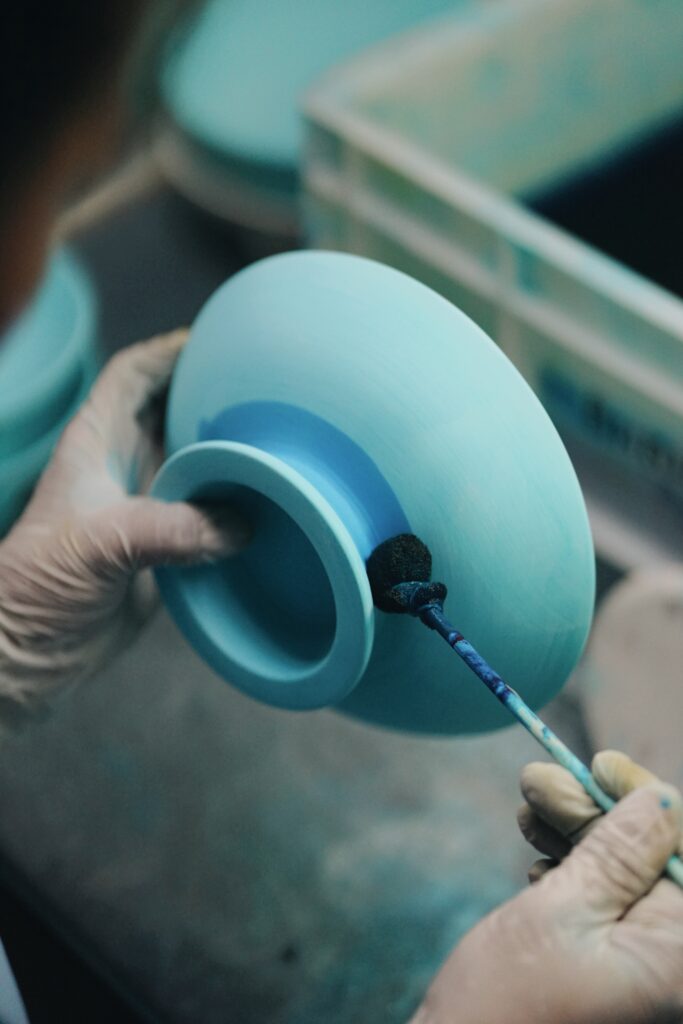
Here’s how it works:
Only flawless pieces proceed to the glazing and decoration stages.
Ink Application
A water-based blue ink is gently brushed or sprayed onto the surface of the biscuit piece. Because the biscuit is porous, the ink penetrates any micro-cracks or structural weaknesses.
Visual Inspection
Our skilled QC team inspects each piece under proper lighting. Any ink seepage highlights cracks that may have occurred during forming or the first firing.
Sorting and Resolution
Pieces with structural cracks are rejected from production.
Minor surface flaws may be reworked or removed, depending on severity.
👉 🔷 What Is the Blue Ink?
The ink used in this process is a highly pigmented, water-based dye specifically chosen for its ability to seep into porous surfaces and reveal even the smallest defects.
- Often made with methylene blue or similar synthetic dyes.
- Designed to be non-toxic, easy to apply, and washable before glazing.
- Functions similarly to industrial dye penetrants used in non-destructive testing, but adapted for ceramics.
- Sometimes enhanced with a surfactant or alcohol to improve penetration into fine cracks.
This technique is especially effective for white or light-colored porcelain and remains one of the most reliable ways to ensure structural integrity before moving on to glazing.
👍 The Result: Trusted Quality, Piece by Piece ✨
This careful inspection ensures that every PATRA porcelain item meets the highest durability standards — whether it’s destined for a fine-dining restaurant, luxury hotel, or your own dining table.
It’s just one of the many behind-the-scenes processes that reinforce what PATRA stands for: professional-grade porcelain, uncompromising quality, and timeless beauty. ☘️


