
 White Ware
 Decoration
To choose the right plate, match its size to the portion, its shape to the arrangement of ingredients, and its depth to the amount of sauce or liquid. Then check that it works for serving, dining and everyday handling.
A plate can look beautiful on its own, yet feel less suitable once food is served. A wide rim may leave too little room for a main course. A flat surface may work for grilled dishes but become awkward for a sauce-rich recipe.
For restaurants, cafés and hospitality teams, the most useful starting point is the menu. Here are three things to consider before choosing your tableware.
1. Choose Plate Size Around the Portion
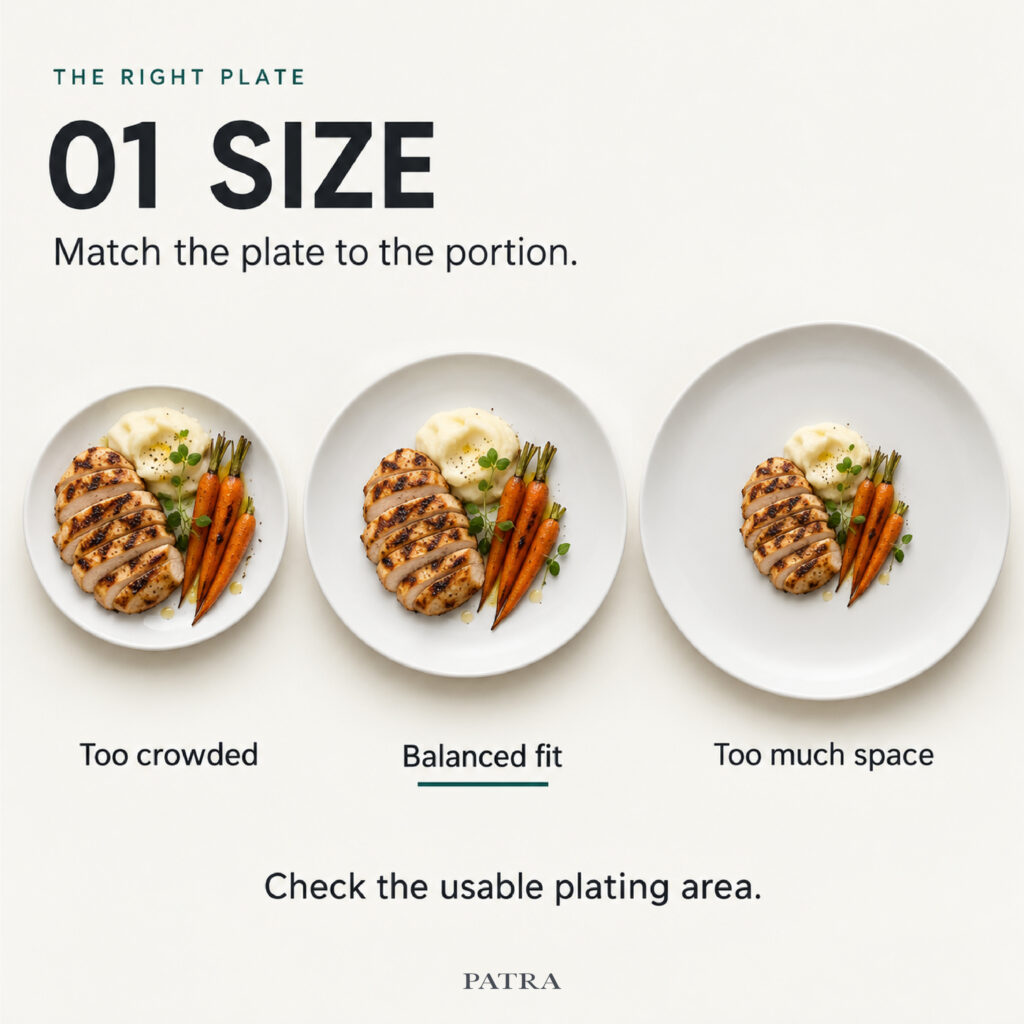
Look at the space available for food, rather than the overall diameter alone. Two plates with the same outer diameter can offer different plating areas because of their rim widths and profiles.
A main course with several components needs enough room for each element and for guests to cut and eat comfortably. A small dessert may suit a more compact plate, while a shared dish needs space for serving utensils.
Consider how the portion looks on the plate, too. Too little room can make the presentation feel crowded; too much empty space may make the serving appear smaller than intended.
**Practical check:** Plate an actual menu portion on a sample. Check the balance of food and open space, then try eating from it with the intended cutlery.
2. Match Plate Shape to the Way You Present Food
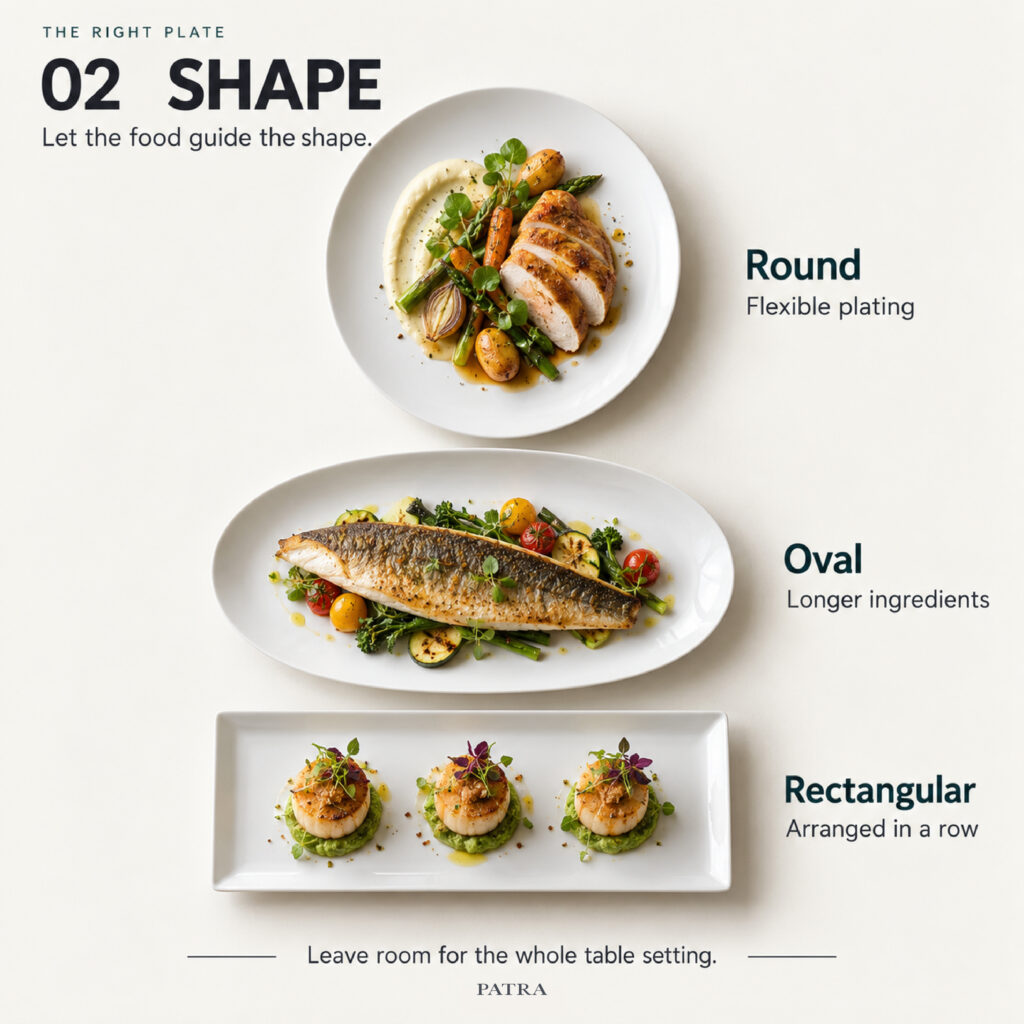
Shape should support how the ingredients are arranged and how the dish is eaten.
– Round plates offer a flexible base for centred or off-centre arrangements.
– Oval plates can suit elongated ingredients, such as a fish fillet, or food arranged for sharing.
– Rectangular plates can work well for items presented in a row, such as small bites or a dessert selection.
The rim also affects presentation. A broad rim can create a visual frame, while a narrow rim or coupe profile can offer a more continuous surface for plating. The available space still depends on the individual design.
**Practical check:** Consider the whole table setting. Check how the plate fits alongside glasses, cutlery and side dishes, especially on smaller tables.
3. Choose Depth to Suit Sauces and Liquids
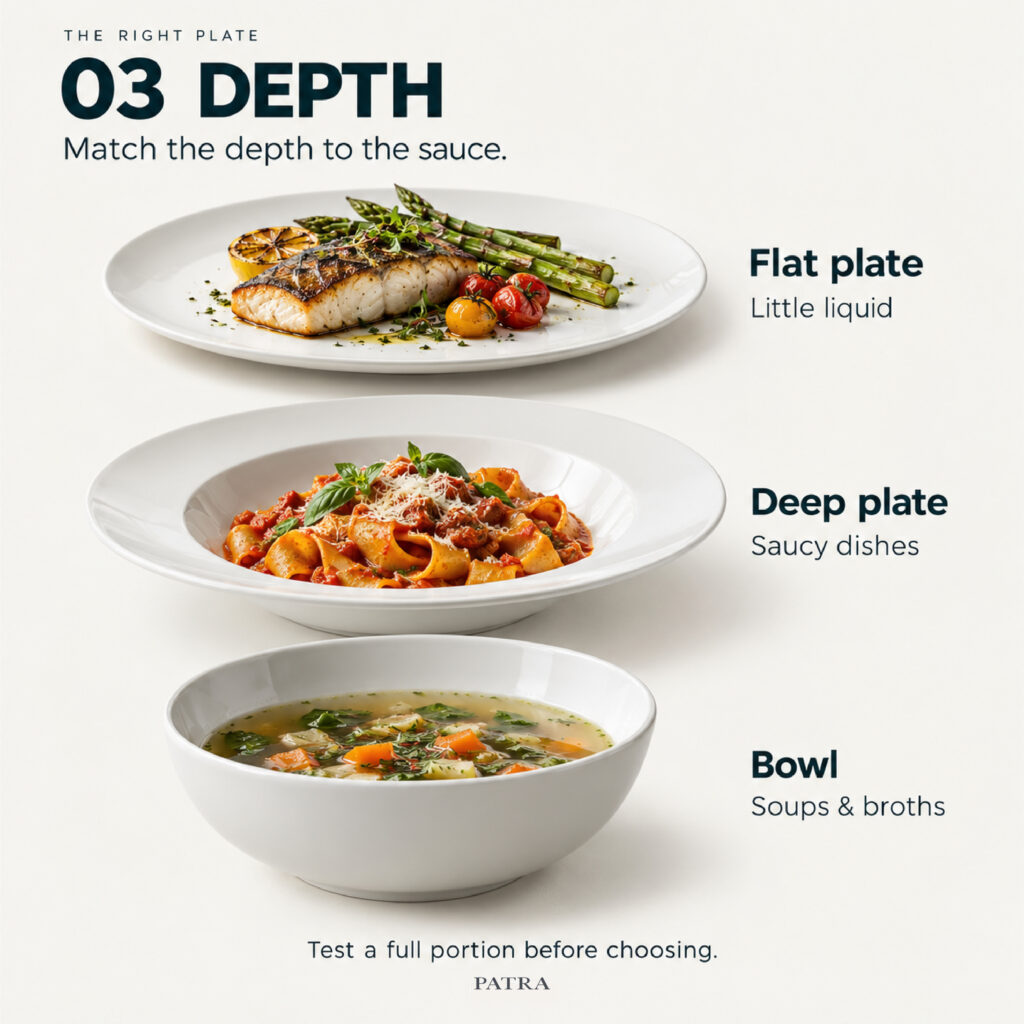
Match the plate’s depth and curvature to the food’s consistency.
A flatter plate can suit dishes with little free-flowing liquid, such as grilled items, pastries or composed desserts. A deep plate or shallow bowl may be more practical for pasta, risotto or dishes with a generous amount of sauce. Soups and broths generally need a bowl with suitable capacity and enough space below the rim for handling.
Depth also affects how guests collect the last bite. Consider whether they will use a knife and fork, a spoon, or a combination.
**Practical check:** Test the full portion, including sauce, and carry the filled piece as it would be carried during service.
## Before Ordering, Test It in Service
Once the food looks right, check the practical details: weight when filled, ease of carrying, stacking, storage space and compatibility with your washing equipment. Confirm care instructions for the specific product and finish.
Testing a sample with your actual menu gives you a clearer basis for choosing than an empty product photograph alone.
Frequently Asked Questions
# What size plate is best for a restaurant main course?
There is no single best size. Choose according to portion size, usable plating area and table space. Test the complete dish on a sample, including sides and sauces.
# Is a deep plate or a flat plate better for pasta?
A deep plate or shallow bowl is often practical for pasta with loose or generous sauces. A flatter plate may suit a more structured presentation with less liquid. Choose according to the recipe and how it will be eaten.
# Can one plate work for several menu items?
Yes, if those dishes have compatible portion sizes, plating styles and sauce requirements. Test each intended dish before choosing a plate as a shared option across the menu.
## Find the Right Fit with PATRA
Start with the dishes you serve, then explore tableware that supports their presentation and everyday use. Browse [PATRA’s tableware collections](https://www.patraporcelain.com/collections/) or [contact PATRA](https://www.patraporcelain.com/contact-us/) to discuss options for your menu.


